Why the insert matters
For electronics, the inner tray does more than make the box look complete. It locates the product, limits movement, separates accessories and helps protect cosmetic surfaces during packing and transport.
Material selection should therefore begin with product weight, fragility, surface finish, humidity exposure, drop requirements, assembly method and destination market—not with a general assumption that paper or plastic is always better.
What is a molded pulp tray?
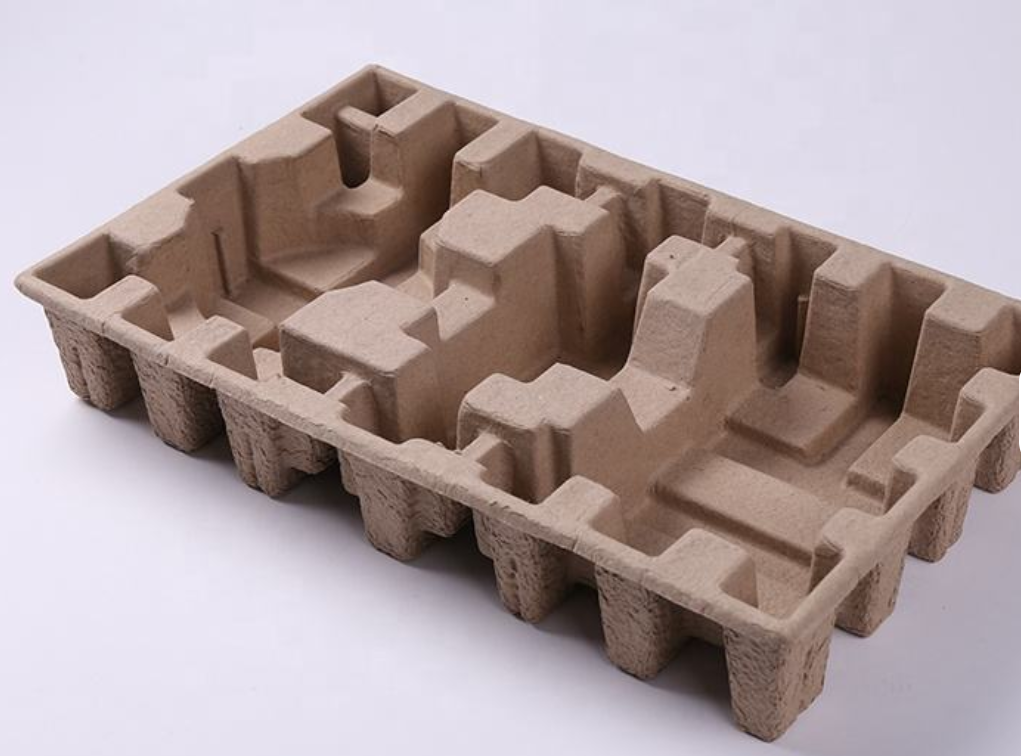
Molded pulp inserts are formed from a fiber slurry using a shaped tool, then dried and finished. The furnish may include recycled paper fiber, bagasse or another qualified fiber source. Dry-pressed formats can achieve a cleaner surface and more controlled geometry than traditional rough molded fiber.
Their natural appearance works well for brands seeking a fiber-forward presentation. Ribs, cavities and local reinforcement can be developed around irregular products, but the final performance still depends on tray thickness, fiber formulation, geometry and process control.
Strengths of molded pulp
Properly engineered molded fiber can provide useful cushioning and hold several components in one formed part. It can also reduce the visual presence of plastic and communicate a natural material direction at unboxing.
Fiber content does not automatically make every tray compostable, recyclable in every location or FSC certified. Coatings, additives, contamination and local collection systems all matter. An FSC claim is only appropriate when eligible material is controlled through the required chain of custody and the finished product is supplied with the correct claim.
Limits of molded pulp
Untreated fiber absorbs moisture. In humid storage or sea freight, changes in strength and dimensions need to be considered, and the complete shipping pack may require moisture management.
The surface is less smooth than plastic and can mark highly polished or mirror-finished products through abrasion. A compatible tissue, nonwoven layer, film or another smooth protective interface may be needed. Molded fiber also has wider dimensional tolerances than a well-controlled thermoformed tray, so tight snap-fits and precision automation should be validated physically.
Strengths of thermoformed plastic
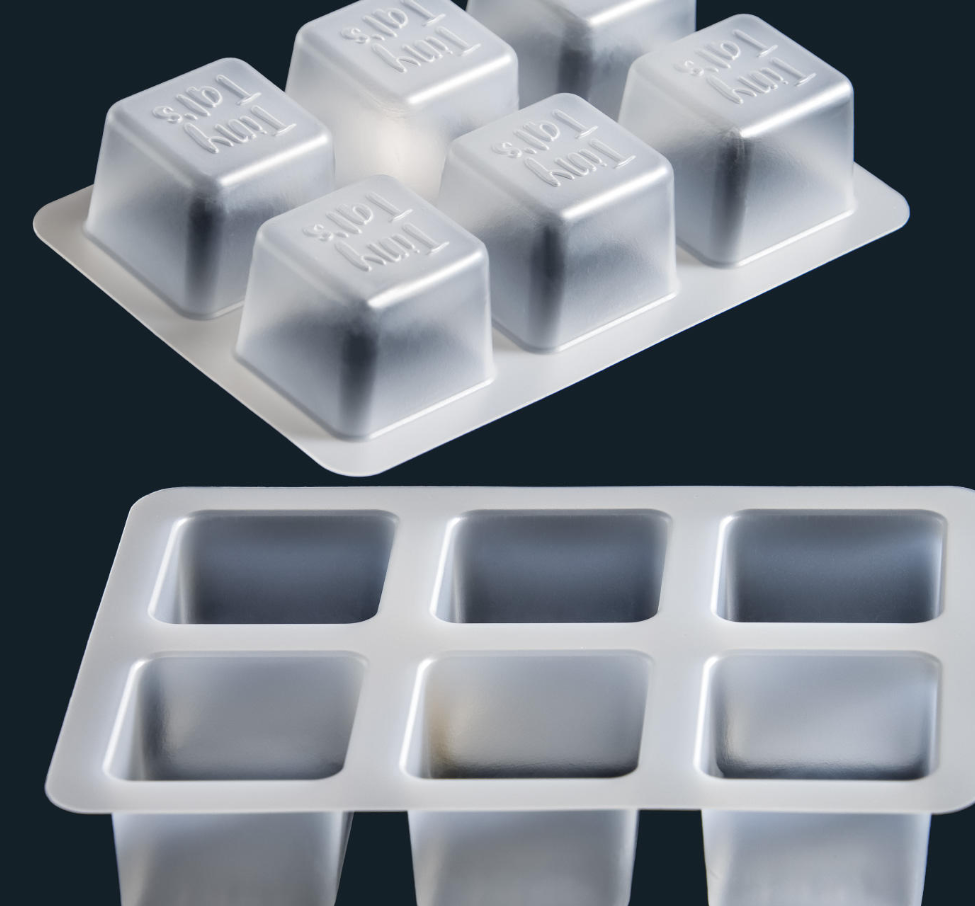
Thermoforming can produce smooth, repeatable cavities with defined edges and reliable product location. It is useful where the product has a delicate cosmetic finish, the packing line needs consistent feeding, the tray must resist humidity or transparent presentation is valuable.
Performance varies by resin, sheet gauge and geometry. PET, PP and PS are common options, while market acceptance and recovery routes differ. A transparent or technically precise tray may be the right functional answer even when a fiber alternative is preferred aesthetically.
Trade-offs of plastic
A thin plastic tray may crack or transmit impact if its geometry and gauge are not designed for the product. Recyclability is also not determined by the word plastic alone: resin type, colour, labels, multi-material construction and local collection systems influence the actual route after use.
Regulation is moving toward packaging minimization and better recyclability rather than a simple universal ban. The EU Packaging and Packaging Waste Regulation covers packaging of every material and generally applies from 12 August 2026. In the UK, Plastic Packaging Tax applies to qualifying plastic packaging components with less than 30% recycled plastic, subject to the detailed rules and exemptions.
A special note on ESD
Neither standard molded pulp nor standard thermoformed plastic is automatically suitable for electrostatic-discharge-sensitive electronics. Ordinary plastic can accumulate charge, while untreated fiber should not be marketed as a verified ESD solution simply because it attracts less visible dust.
If the product contains ESD-sensitive components, specify the required packaging properties and use purpose-designed conductive, dissipative or shielding materials as appropriate. The tray and complete packaging system should be evaluated against the customer's ESD control plan and relevant test methods.
A practical selection guide
Consider molded pulp when the project prioritizes a natural presentation, formed cushioning, irregular cavities and a fiber-based material strategy. Add abrasion protection for high-gloss products and manage moisture for demanding transport routes.
Consider thermoformed plastic when humidity resistance, smooth contact surfaces, tight tolerances, transparency or automated assembly are decisive. Confirm the resin, recycled-content evidence and destination-market recovery route before final approval.
For either option, a prototype and transport validation are more reliable than a material-level promise. Product fit, drop performance, vibration, compression, humidity and pack-out efficiency should be reviewed together.
How Lume Packing recommends the tray
Lume Packing can develop both molded pulp and thermoformed plastic inserts. We do not recommend one material for every project. We compare the product surface, weight, geometry, electronics sensitivity, packing process, transport route, sustainability target and commercial requirements before proposing a structure.
Share your product dimensions, weight, destination market, annual quantity and any drop, humidity, abrasion or ESD requirements. We can then recommend a tray direction and prepare the appropriate prototype for confirmation.